Sericea lespedeza is a major invasive species of concern on rangeland, pasture, and some CRP acres in Kansas. This Category C noxious weed infests nearly 300,000 acres in Kansas as of 2024. The species is primarily found in the southeastern US but is expanding westward and northward (Figure 1). Category C noxious weeds are well-established and known to exist in large or extensive populations in Kansas. Control efforts should focus on reducing or eliminating new infestations and on using approved control methods to reduce the spread of established populations.
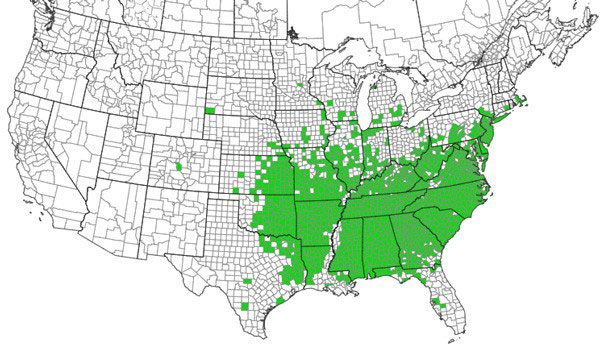
Figure 1. Distribution of sericea lespedeza in the U.S. Source: EDDMaps (2025).
Sericea lespedeza is a perennial legume with trifoliate leaves that are club or wedge-shaped (Figure 2). Plants are usually about 3 feet tall but can grow to several feet in height under ideal conditions. Plants start to bloom in August with white to cream-colored flowers with a purple throat. Seed production occurs in September or October. Sericea lespedeza produces numerous, long-lived seeds, which means preventing or reducing seed production is necessary for successful management.
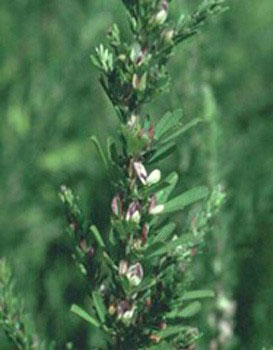
Figure 2. Trifoliate, wedge-shaped leaflets and flowers of sericea lespedeza. Photo by Walt Fick, K-State Extension.
Management Options
As a noxious weed in Kansas, sericea lespedeza needs to be controlled. Sericea lespedeza has a tremendous seed bank that helps reestablish stands. Combinations of prescribed burning, grazing, mowing, and herbicide application should be used for long-term management of sericea lespedeza.
Prescribed burning stimulates the germination of sericea lespedeza seed, but fire followed by herbicide application can help deplete the existing seed bank by killing seedlings and new growth stimulated by the fire. Goats readily consume sericea lespedeza foliage, but cattle are not effective grazers of sericea lespedeza. Cattle have been reported to readily consume sericea as hay if the hay is cut before the sericea lespedeza buds. If an early intensive stocking method is used with cattle, consider following up with herbicide application approximately 6 weeks following destocking to treat sericea if it is still actively growing. Defoliation treatments, such as burning, grazing, and mowing, utilized in late summer can prevent seed set in existing plants, which typically occurs in late September or October.
Mid-May to June is a good time to control new seedlings and established sericea lespedeza plants that are at least 10-12 inches tall using herbicides. At this time, sericea lespedeza is in a vegetative growth stage (Figure 3) and is rapidly growing. By the end of June, plants will begin to branch and become woodier, making them less likely to absorb herbicides.
The most effective herbicides to treat sericea lespedeza during the vegetative growth stage are triclopyr (Remedy Ultra) or triclopyr + fluroxypyr (PastureGard HL). Broadcast applications of Remedy Ultra at 1 to 2 pints/acre and PastureGard HL at 0.75 to 1.5 pints/acre should be applied in spray volumes of 10 to 20 gallons/acre. Another herbicide option would be picloram + fluroxypyr (Surmount) at 2 pints/acre. Surmount is a restricted-use pesticide and would be a good choice if you want to treat roughleaf dogwood or blackberry simultaneously. Once sericea starts to branch, metsulfuron-containing herbicides such as Escort XP (0.5 to 1 oz/acre) can be effective.
For spot application, mix 0.5 fl oz PastureGard HL per gallon of water or use a 1% solution of Remedy Ultra in water. Aerial applications of these products should be done with a minimum spray volume of 3 gallons per acre. Higher volumes, e.g., 5 gallons per acre, will generally be more effective.
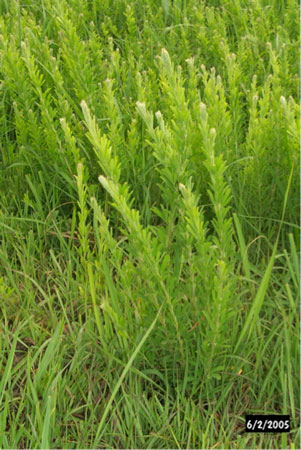
Figure 3. Vegetative growth stage of sericea lespedeza. Photo by Walt Fick, K-State Extension.
There are no grazing and haying restrictions for livestock and lactating grazing animals following the use of Remedy Ultra and PastureGard HL. There is a 14-day waiting period prior to hay harvest using these two herbicides. If Surmount is used, there is no waiting period before grazing all livestock except for lactating dairy animals (14 days before grazing). Surmount also requires a 7 to 14-day waiting period before hay harvest, depending on whether the hay will be fed to beef animals or lactating dairy animals. There are no grazing or haying restrictions following the application of Escort XP.
Take-Home Message
Control measures must be repeated frequently to keep this invasive species in check. Initial treatments should reduce dense stands to the point where spot treatment can be used in future years. Left untreated, sericea lespedeza will dominate a site, greatly reducing forage production and species diversity. Consider an integrated approach that combines herbicide application with other management methods to increase the likelihood of successful sericea control. More established populations will require more frequent management over a longer period, so controlling newly established plants is key to economically managing this noxious weed.
Molly Reichenborn, Rangeland Management Specialist
mreichenborn@ksu.edu
Sarah Ganske, Weed Science Extension Specialist
slancaster@ksu.edu
Tina Sullivan, Northeast Area Agronomist
tsullivan@ksu.edu
Tags: weed control rangeland pastures sericea lespedeza noxious weed