Over the years, we have observed the effects of late freezes on canola at the rosette, bolting, and flowering stages. We can draw on these experiences to understand how the recent hard freeze events might impact the crop. The extent of the damage will ultimately depend on several factors, including the lowest temperature reached, the duration below freezing, the crop's growth stage, and other environmental factors such as soil moisture and wind exposure.
Common hard-freeze damage include:
- leaf discoloration and loss
- stem cracking and splitting
- bud, flower, and pod loss
- plant lodging.
In some instances, the crop may suffer a yield penalty because the damage is too severe to overcome. In other instances, growing conditions afterward allow the crop to produce more flower buds, flowers, and seed pods; thus, a yield penalty may not be significant. Canola is indeterminate (continues to flower and produce seed pods for an extended period), and because of this, it possesses numerous growing points on the plant. These growing points can develop new flowering sites that will compensate for damaged ones when stresses occur.
The growth stage can affect the extent of crop damage depending on how low and how long temperatures were below freezing. Canola is most tolerant of freezing temperatures during the rosette stage prior to green-up and is more susceptible during the bolting, flowering, and pod-filling stages. This year, canola was in the rosette, bolting, and early flowering stages across the state when temperatures dropped into the low teens and single digits. Previously, we have observed severe damage from freezes below 20 degrees F at this stage of the growing season.
What happened this year?
Temperatures dropped to 10.0 degrees F and remained below freezing for 24 hours near Manhattan. There was a good chance of seeing freeze injury in plants at the early bolting stage. The canola was abruptly frozen and filled with ice on the morning of March 16. When swiping a hand across the canopy, leaf tissue shattered, and plant stems could be broken in two with ease (Figure 1). The following night, temperatures dropped as low as 18.0 degrees F.
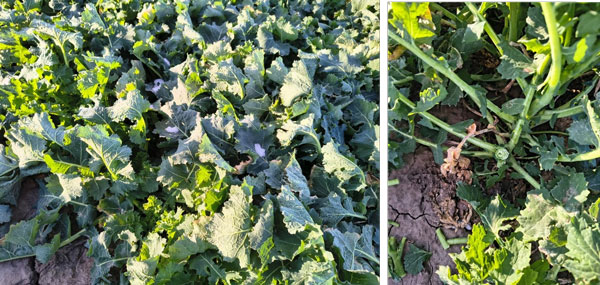
Figure 1. Frozen plant tissue and broken stems at the Rocky Ford Plant Pathology Farm near Manhattan the morning of March 16. Photos by Mike Stamm, K-State.
Plants on the morning of March 17 at the Agronomy North Farm had more of a rubbery feel after temperatures rose above freezing only briefly the day before. There appears to be injury to buds on the main stem on plants that were bolting. (Figure 2). Leaf damage was widespread. As temperatures remain much above normal, it will be interesting to see if the vascular tissue is too damaged to initiate regrow. Similar potential damage was observed at the North Central Kansas Experiment Field near Belleville.
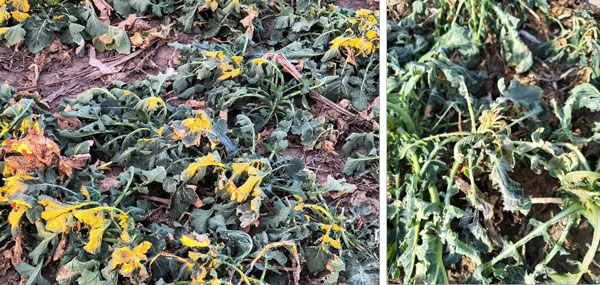
Figure 2. Winter canola plants following a second cold night on the morning of March 17 at the Agronomy North Farm near Manhattan. Photos by Mike Stamm.
Still canola plants in the early flowering stage near Pretty Prairie seemed relatively unphased following the freeze events. Temperatures did not get as cold in this area of the state. Slight leaf discoloration and bending and twisting of the main raceme were the primary injury symptoms. The crop should straighten up and regain new growth with time (Figure 3).
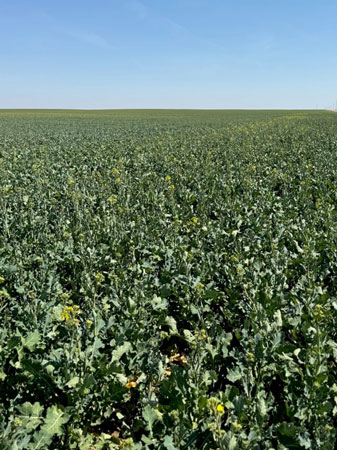
Figure 3. Winter canola field near Pretty Prairie following hard freeze. Photo courtesy of Jeff Frazier, Scoular.
Common indicators of injury to late freeze in canola
At any growth stage following a spring freeze, leaf discoloration, or bleaching, is often observed. The plant can easily tolerate some leaf discoloration without slowing new biomass development. However, if the crop does not return to normal growth after the freeze, and turns pale green, white, or brown, then the damage was likely severe. Discoloration is most evident on leaf tissue, and to a lesser extent, on the stem. Sometimes, stems and flower buds turn pale green or purple, which is a symptom of cold temperatures and does not necessarily indicate tissue damage.
Stem cracking can be observed on bolting and flowering canola following freeze events. Even if the stem cracks, the canola plant should continue to grow normally. Splitting occurs when the stem fills up with ice and ruptures. If the stem splits completely open, it may result in the plant eventually falling over. Severe freeze injury occurs when stems are translucent and mushy. Cracked and split stems can become entry points for fungal decay.
At the flowering stage, we often see a bend or crook in the stem and flowering racemes. Often, these bends may take the flowering racemes to the ground; however, we have seen plants straighten and continue flowering normally. The only problem may be the racemes set seed below the main canopy of pods, potentially creating problems at harvest.
After any spring freeze event, blank areas will likely be observed on flowering racemes. In severe cases, we have seen the main raceme and some secondary branches completely freeze off and die. However, the crop can compensate for the losses with secondary branching.
Long-term impact of freeze damage
Repeated freeze events and longer durations of temperatures below 20 may increase the severity of damage. The extent of damage and potential yield loss relative to how long it stays cold is somewhat of an unknown. But if the plants show normal growth following freeze events, reasonable yields can be expected. The longer it takes the plants to recover may also give some indication of how severe the freeze impacts were.
The indeterminate growth habit still gives canola an opportunity to compensate for lost yield. How well the crop yields will be a function of the weather over the next few weeks.
Mike Stamm, Canola Breeder
mjstamm@ksu.edu
Tags: canola freeze injury winter canola