Planting, tillage, and generalized traffic after wet weather can cause soil compaction, particularly sidewall compaction in the seed furrow. The worst cases of sidewall compaction occur after a field has been planted, when the soil is too wet, followed by a period of dry weather. If the soil stays moist, the roots can usually grow through the walls of the seed furrow. However, if the soil dries, the roots can have a harder time growing through the seed furrow wall and instead grow along the furrow, resulting in sidewall compaction (Figure 1).
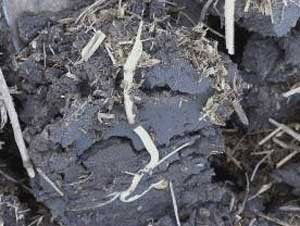
Figure 1. Sidewall and seed zone compaction in heavy clay soil. Photo by Stu Duncan, K-State Extension.
With corn, the plants might look fine for some time, but the symptoms mimic drought stress and/or nutrient deficiency after the plants grow to several inches tall (Figures 2 and 3).
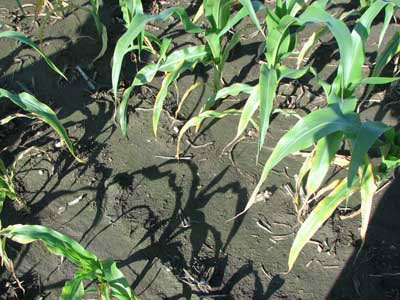
Figure 2. Potassium deficiency in a field with sidewall and seed zone compaction in a wet, clayey soil. Photo by Stu Duncan, K-State Extension.
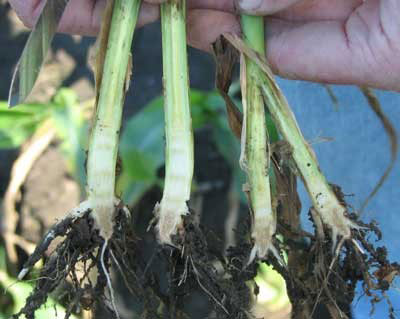
Figure 3. Planting into a cold, saturated soil resulted in sidewall compaction, leading to crown rot and "chronic" corn. Photo by Stu Duncan, K-State Extension.
Given the limitations in remediating sidewall compaction once it occurs, the best practice is to avoid creating the problem and wait until the field dries for planting. The way to test for this is to dig down to the desired planting depth and form a ball of soil. Next, see if the ball crumbles or cracks, or if it deforms like molding putty. If it crumbles, it is ready to plant. If it deforms, it would be best to wait before resuming field operations. Even waiting as little as half a day could make a big difference.
Other considerations
- Planting too shallow: This may lead to wheel compaction below the seedling depth. This results in limited downward root growth and seeds growing horizontally.
- Too much down pressure: If you must work in wet soil, then the down pressure of the row unit and press wheels needs to be reduced to limit compaction around the seed.
- Soil structure: Tilled soils often lack proper soil structure, causing the standard closing wheel to pinch the sidewalls over the seed from additional pressure. This is frequently a concern in heavier-textured soils, i.e., higher clay content.
DeAnn Presley, Soil Management Specialist
deann@ksu.edu
Tina Sullivan, Northeast Area Agronomist
tsullivan@ksu.edu
Tags: planting soil compaction wet soils