Cover crops are widely recognized for improving soil health and reducing erosion, but their role in protecting water quality is more complex and system-specific. A new K-State Extension publication, Cover Crops for Protecting Water Quality, discusses how cover crops influence sediment (Figure 1), nitrogen, and phosphorus losses from Kansas cropping systems.
The publication highlights both the proven benefits of cover crops and the important trade-offs to consider. Additionally, readers will find a clear, research-based framework to help producers decide when and how cover crops can most effectively protect both soil and water resources (Figure 2). This decision-based approach helps producers and advisors evaluate their own fields, identify which water quality concerns are most relevant, and determine whether a cover crop is likely to be an effective tool within their overall conservation and nutrient management strategy.
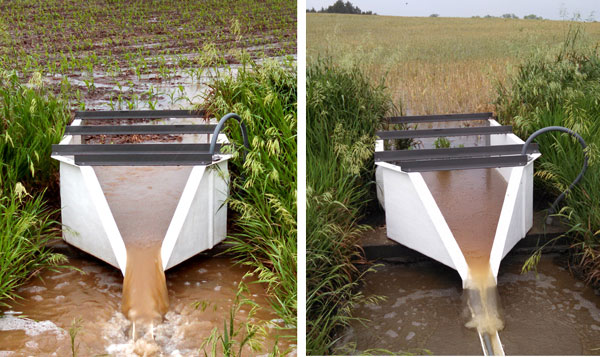
Figure 1. Runoff event from a non-cover crop plot (left) and a cover-crop plot (right) in a corn production field. Runoff water from the cover crop plot is clearer than the no-cover-crop plot, visually indicating reduced sediment loss with the cover crop. Photos from K-State Department of Agronomy.
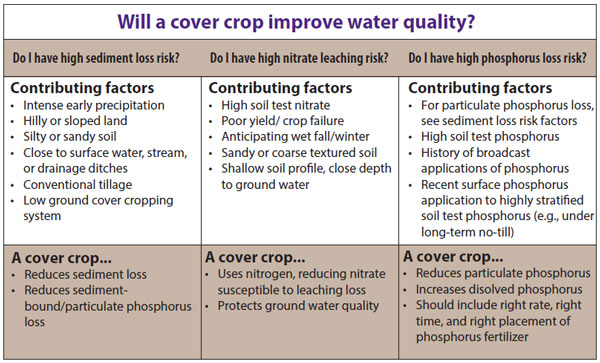
Figure 2. Situations leading to sediment, nitrate, and phosphorus losses, and ways a cover crop reduces the risk of loss. Graphic from K-State Extension publication MF3686.
Read the full publication here:
https://bookstore.ksre.ksu.edu/item/cover-crops-for-protecting-water-quality_MF3686
Authors*
Megan Bourns, Former K-State Graduate Student
Nathan Nelson, Soil Fertility and Nutrient Management
nonelson@ksu.edu
Peter Tomlinson, Environmental Quality Extension Specialist
ptomlin@ksu.edu
*See publication for the full list of authors