Wheat rusts (leaf, stripe, and stem) remain among the most significant diseases to watch for in Kansas and surrounding states. In most years, there are low-level fall infections in the region, and they are typically of little concern. In 2025, we have noted unusually high levels of leaf rust in our fall-established crop. In most years, fall infections are limited by cool, dry weather in the fall. Fall infections will usually die off over the winter, and these rusts will work their way up from the South again in the spring. This fall, weather patterns in Kansas have encouraged higher levels of leaf rust infections than we typically observe (Figure 1). Earlier-planted wheat is more severely affected because it has been exposed to rust infections for a longer period. Fields that received a fungicide seed treatment should have had around 30-45 days of rust suppression after planting and may be experiencing less severe infections.
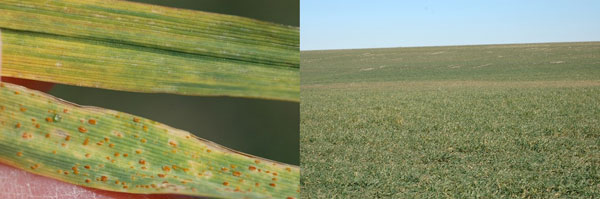
Figure 1. Fall infestation of leaf rust in wheat (left) in Prowers County, southeast Colorado, in 2025 resulted in a brown or orange cast across the field (right). Photos submitted by a farmer and used with permission.
Leaf rust can appear on fall-planted wheat well before dormancy when conditions are favorable. This year’s early infections were linked to extended mild temperatures in late fall (Figure 2), higher-than-normal precipitation (Figure 3), and the presence of volunteer wheat or grassy weeds that allowed rust to survive locally over the summer months. Spores carried from southern states, where rust survives year-round, can also contribute to the early development of disease. However, the current dry and much colder temperatures will help to reduce the rate of development and spread.
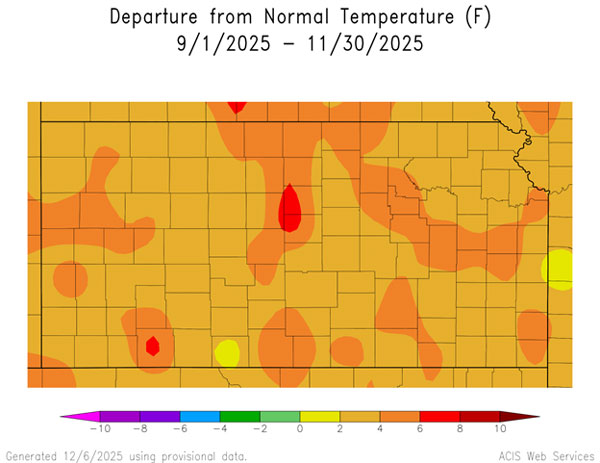
Figure 2. Temperature deviation from normal for the period from September 1 – November 30, 2025. Data and map produced by the NOAA High Plains Regional Climate Center.
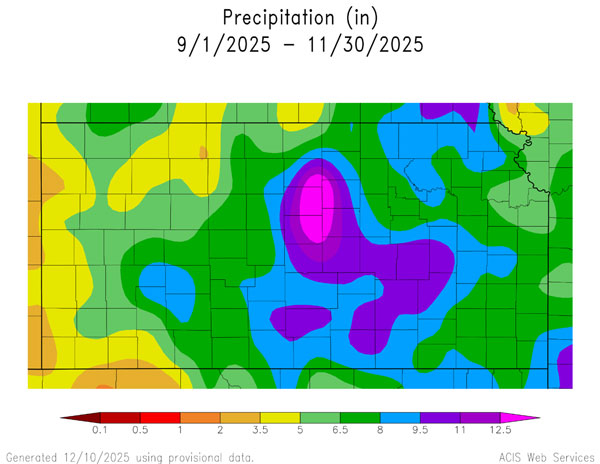
Figure 3. Total precipitation in Kansas during the period from September 1 through November 30, 2025. Data and map produced by the NOAA High Plains Regional Climate Center.
When leaf rust is highly active in the fall, the potential for overwintering increases. If winter is mild or persistent snow cover protects the foliage, there is a small chance that leaf rust can survive the winter and resume activity early in the spring. This may create a scenario in which the disease may progress rapidly in the spring if the weather is warm and wet early. Producers should be mindful of this possibility and resume scouting after the spring green-up.
If rust is active early in the spring, producers may consider two fungicide applications—an early-season spray followed by a flag-leaf spray—to maintain yield potential. However, this level of treatment may not be economically feasible when wheat prices are low. Scouting and understanding variety resistance will be very important in this case.
Fall fungicide applications are generally not recommended. Even so, growers should plan ahead for spring 2026 by remaining flexible in their fungicide strategy.
Useful resources:
- Kansas Wheat Variety Guide 2025: https://bookstore.ksre.ksu.edu/pubs/MF991.pdf
- Foliar Fungicide Efficacy Ratings for Wheat Disease Management 2025: https://bookstore.ksre.ksu.edu/pubs/EP130.pdf
- Wheat Disease Identification: https://bookstore.ksre.ksu.edu/pubs/wheat-disease-identification_MF2994.pdf
Kelsey A. Onofre, Wheat Pathology Extension Specialist
andersenk@ksu.edu
Jeanne Falk Jones, Northwest Area Agronomist
jfalkjones@ksu.edu
Logan Simon, Southwest Area Agronomist
lsimon@ksu.edu
Tina Sullivan, Northeast Area Agronomist
tsullivan@ksu.edu
Tags: wheat disease wheat rust